

Picture a boy in Class 4 colouring a tree. He picks up the brown crayon for the leaves and the green one for the trunk. His teacher smiles and says, "Careful, beta." He has no idea what he did wrong.
For him, those two colours look almost the same.
This isn't carelessness or a lack of talent. It could be colour blindness, a condition far more common than most people think, and one that often goes unnoticed for years.
Let's clear up the confusion.
The short answer
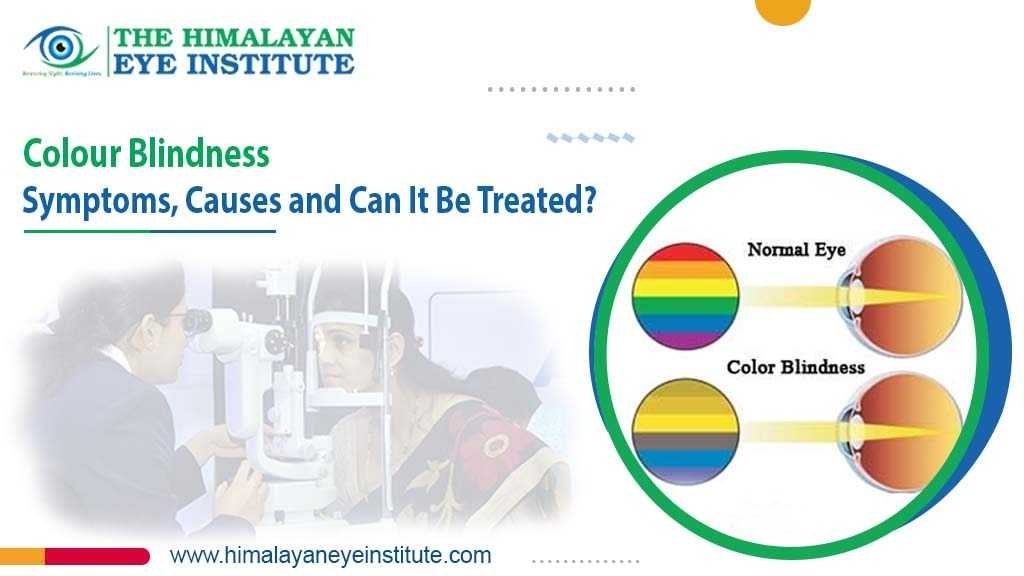
Colour blindness, or colour vision deficiency, means your eyes mix up certain colours, or can’t tell some of them apart. Most people are born with it, and it runs in families. There’s no cure for the inherited kind, but people cope with it far better than you’d think. And when something else is behind it, like a cataract, that part can often be treated.
Despite the name, most people with colour blindness don't see the world in black and white. They simply see some colours differently.
How does the eye see colour?
At the back of your eye is the retina. It's packed with tiny light-sensing cells called cones. Most of us have three kinds: one picks up red light, one green and one blue. Your brain blends their signals into the thousands of shades you see every day.
In colour blindness, one or more of these cone types is missing, weak or not working the way it should. The brain gets mixed signals, and some colours blur together.
The main types of colour blindness
Red-green colour blindness. By far the most common. Reds, greens, browns and oranges can look alike. Some people find red appears dull or darker. Others can't separate green from brown or orange.
Blue-yellow colour blindness. Rare. Blues and greens may look similar, and yellow may seem pale or pinkish.
Complete colour blindness. Very rare. A person sees few or no colours, and may also have poor sharpness of vision and sensitivity to light.
Within these groups, the problem can be mild, moderate or severe. Many people have a mild form and go years without knowing.
Symptoms: what to look out for
Colour blindness doesn't hurt, and it doesn't blur your vision. That's exactly why it's so easy to miss.
Signs that might point to it:
- Mixing up colours, such as red and green, or blue and purple
- Trouble reading colour-coded charts, maps or graphs
- Difficulty telling whether fruit is ripe, or meat is cooked
- Not noticing a red rash, or flushed skin
- Picking clothes that don't match, and being told so
- Trouble with traffic lights in poor light or at a distance
In children, watch for unusual colouring (purple grass, blue faces), reluctance to join colour-based activities, or struggling with colour-coded school material. Many children never say anything because they don't know they see differently.
What causes colour blindness?
1. It runs in families (the most common cause)
Most often, it's simply in the family. The gene sits on the X chromosome, which is why there are so many more colour-blind men than women. Roughly 1 in 12 men, against about 1 in 200 women.
2. Eye diseases
Conditions that affect the retina or the optic nerve can change how you see colour. These include glaucoma, macular degeneration and diabetic eye disease. Colour vision may fade slowly, and often unevenly between the two eyes.
3. Cataract
Cataract is the one people struggle to believe until it's gone. Everything looks slightly yellow and tired. After surgery, many say, "Was the sky always this blue?"
4. Certain medicines
A few long-term medicines can affect colour vision too. If something feels different, tell your doctor. Don't stop taking anything on your own.
5. Ageing, injury and other conditions
Then there's the rare stuff: ageing, head injuries, a few nerve and brain conditions.
How is colour blindness diagnosed?
It's quick and painless. An eye specialist usually uses:
- The Ishihara test: the famous plates made of coloured dots with a hidden number inside. If you can't see the number, it's a clue.
- Arrangement tests: you place coloured caps or discs in order of shade.
- Other tests, if more detail is needed to find the type and severity.
A full eye check-up also helps rule out other eye problems, especially if your colour vision has changed lately.
Don't rely on an online test alone. Screens vary a lot, and they can't replace an exam with an eye doctor.
Can colour blindness be treated?
Here's the honest answer, and it comes in two parts.
Inherited colour blindness has no cure at present. The faulty cones can't yet be repaired. Researchers around the world are studying options such as gene therapy, but nothing is part of routine care yet.
That said, there are practical ways to help:
- Tinted glasses. Results vary. Some people notice a real difference, while others feel nothing at all. They won’t give you “normal” colour vision, so try a pair before you pay for one.
- Phone apps. Point the camera at a shirt or a fruit and it tells you the colour. Very handy in front of a rack of clothes.
- Labels and patterns. At school or work, charts with labels or patterns help everyone, not just people with colour blindness. A few labels at home do more than you’d expect.
Colour blindness that starts later in life is another matter. If a cataract is behind it, taking the cataract out often brings the colours back. If it’s a medicine or an eye disease, your doctor may be able to manage it, and catching it early protects the vision you still have.
This is why anyone who notices a sudden change in colour vision shouldn't wait. It can be an early warning sign of something else.
Living well with colour blindness
Most people with colour blindness lead full, successful lives. Still, a few areas need thought:
- School: Tell teachers early. A simple seating or worksheet change can make a big difference.
- Careers: Some jobs, such as certain roles in the railways, aviation, armed forces and electrical work, have colour vision standards. It's better to know early, so you can plan your path with confidence.
- Driving: Most people with colour blindness drive safely, learning to rely on the position of traffic lights and on brightness.
- Daily life: Cooking, shopping and dressing are easy once you build a few tricks.
And please, be kind to your child (or yourself) when colours get muddled. It's not a lack of attention.
When should you see an eye doctor?
Book a visit with an eye doctor if:
- Your child often mixes up colours, or struggles with colour-based tasks
- Colours suddenly look faded, dull or different
- Colour vision seems different in one eye
- You have diabetes, glaucoma or a family history of eye disease
- A job or course you're applying for needs a colour vision test
A first eye test for children before they start school is a great habit. It catches colour blindness, short sight and lazy eye early.
Frequently asked questions
What exactly is colour blindness?
Short version: your eyes mix up certain colours. Red and green, mostly. The medical term is colour vision deficiency, which sounds scarier than it is. Most people are simply born with it and get on with life just fine.
What are the symptoms of colour blindness?
Actually, there aren't really symptoms in the usual sense. No pain, no blur, no redness. What you get are little mix-ups. Red with green, brown with orange, blue with purple. Colour-coded charts and maps turn into a headache. Plenty of people only find out when a job or course asks for a colour vision test, or when a teacher points at the purple grass in a drawing.
What causes colour blindness?
Mostly it's in the family. The gene sits on the X chromosome, so it gets passed down, often through a mother who has no idea she carries it. But not always. Cataracts, glaucoma, diabetes-related eye damage, a few medicines, even a hard knock to the head can change how you see colour. That's why a sudden change deserves a proper look.
Can colour blindness be cured?
Not the one you’re born with. Not yet. Scientists are working on gene therapy, but no clinic can offer it today, and we won’t pretend otherwise. What does exist is smaller stuff. Some people like tinted glasses, though they won’t give you “normal” colour vision, and a fair number of people try them and just shrug. Phone apps can name a colour when you point the camera at it, which is handy in front of a rack of shirts. And honestly, a few labels at home do more than you’d expect.
If a cataract is the reason your colours look dull, that's a different story. Surgery often brings them back.
Why are more men colour blind than women?
Blame the X chromosome. Men have just one, so if the gene is faulty there's no backup. Women have two, and the second copy usually covers for the first. Roughly 1 in 12 men are affected, against about 1 in 200 women.
Can colour blindness get worse with age?
The kind you're born with stays put. If your colours seem to be fading, or one eye sees them differently from the other, that's something else, and it's not worth waiting on. Book an eye check.
Should my child be tested for colour blindness?
Yes, and the earlier the better. It takes a few minutes and doesn't hurt. It also spares your child the "why did you colour the leaves brown?" scoldings. If colour blindness runs in your family, especially on the mother's side, it's even more worth doing.
Looking for an eye hospital in Siliguri?
At Himalayan Eye Institute, we think eye care should feel simple and unhurried. If you or your child has noticed a problem with colours, our team can carry out a colour vision test, look at your overall eye health, and explain what the results mean, in words you'll actually understand.
Whether you need a colour vision check, a routine eye test, or advice about cataract surgery in Siliguri because colours have been fading, we're here to help. You can count on an experienced eye doctor in Siliguri and a welcoming eye clinic in Siliguri where no question is a silly one.