
As parents, we see our children grow, with our eyes, their first steps, their first words, their first day at school. One thing we often ignore is their initial check-up with a pediatric eye doctor. Children learn, interact and experience the world around them in many different ways, including through vision. However, many conditions affecting the eyes of children are overlooked because the child doesn't know how to tell you what they can't see.
What is a Kids’ Eye Doctor Called?
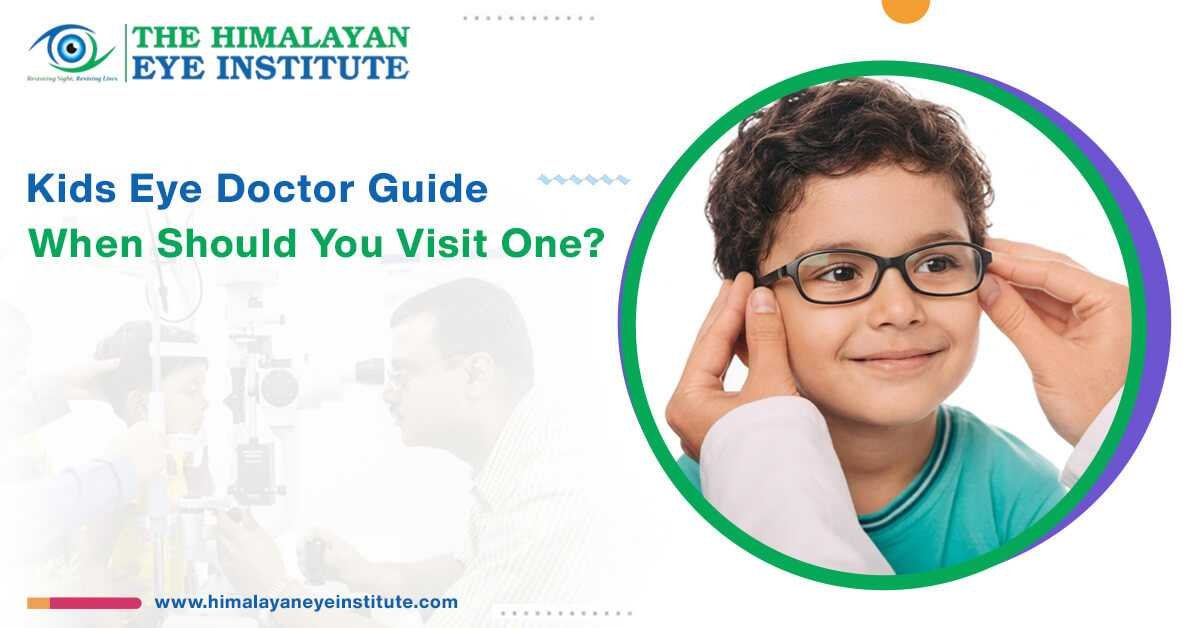
A children's eye doctor is also called a pediatric ophthalmologist. They are medical doctors with specialised training and experience in the examination and treatment of babies, children, and teens for any visual problem. They have advanced training to anticipate how vision develops in children. They are aware that eye conditions can appear at a very young age.
Children's eye doctors can identify and manage a lot of different eye conditions, like vision problems, eye turn (strabismus), lazy eye (amblyopia), birth cataracts, allergic and infected eye disease and other developmental eye disorders, which are commonly seen in children. They can also easily manage and examine children for eye exams, which is beneficial for children as well as for the parents.
Why Children's Eye Health Is Different
Children's eyes are different from those of adults and require special attention.
The visual system in a child is not just the same as the visual system in an adult. It is still developing from birth until a child is about 8 years old. The brain and eyes are creating the connections that become essential for lifelong visual function. In this crucial time window, the brain and eyes are forming connections which will make the difference for long-term visual function.
There could be a major error in the refraction (how the eye focuses light) or the eyes are not lined up, or something is stopping sight from being clear in one eye. If something is wrong and not corrected during this phase, the brain switches off the eye, and this is amblyopia or lazy eye, which is much harder to fix when older.
Hence, child eye checkup services are not just a precaution! These are essential.
When to See a Child's Eye Doctor?
There's no age that's “too early” to have an eye exam. Pediatric ophthalmologists suggest this schedule of recommended eye exams:
- Newborns (0-3 Months): Will have a simple red reflex examination by the paediatrician to check for serious problems, including congenital cataracts or retinoblastoma.
- 6 Months: Routine eye examination is advised to check for any early signs of refractive error, focusing ability and alignment.
- 3 Years: Screening for a detailed vision evaluation before preschool. Children of this age are able to perform simple visual acuity tests.
- 5-6 Years: Undetected vision problems at this stage can directly impact reading, writing, and classroom learning.
- Every 1-2 Years: Routine monitoring throughout the school years every 1-2 years, and increased monitoring if a problem has been identified.
Do not delay for a school screening only! Limited eye tests conducted at school might not identify serious eye diseases that a specialist in children's eye diseases could.
Warning Signs That Your Child Needs an Eye Exam Now
If you notice any of the following, get a kids' eye doctor appointment immediately - whether it's routine or not:
- Eyes may look out of the socket or droop to one side, up or down, or outwards
- Repeated rubbing of the eye and/or a lot of blinking
- Squinting or tilting of the head to see better
- Sitting very close to the TV or holding books in an unusual way
- Headaches, especially after reading or viewing screens
- One eye is larger than the other, or the pupil is white/cloudy
- Photosensitivity, tearing without a specific reason)
- Lower achievement or reading ability problems, Poor school achievement or reading problems
- Difficulty coordinating the hands and eyes and/or clumsiness
Many of these signs may be interpreted as fatigue or lack of concentration. A pediatric ophthalmologist or trained optometrist for children will have the information that a parent often lacks.
Common Eye Problems That Can Occur in Children
Amblyopia (Lazy Eye): When one eye has lower vision than the other. The brain does not pay attention to the signals received by the weak eye. Patching, glasses or eye drops are used to treat it. If diagnosed early, it is most effective.
Strabismus, Crossed or Misaligned Eyes: When the eyes move in different directions. If not treated early can cause amblyopia. Glasses, patching, exercises or surgery are used to treat this eye condition.
Refractive Errors: The most common reasons for children to need glasses are refractive errors: Myopia (short-sightedness), hyperopia (long-sightedness) and astigmatism. They can be corrected with a correct diagnosis and treatment.
Conjunctivitis: Inflammation or infection of the outer layer of the eye. Widely seen in school-age children and is highly contagious. Requires prompt treatment.
Congenital Cataracts: Rarest and most serious. Congenital cloudiness of the lens can cause permanent vision loss if the child is not treated at the right time with surgery.
What Happens During a Child's Eye Checkup?
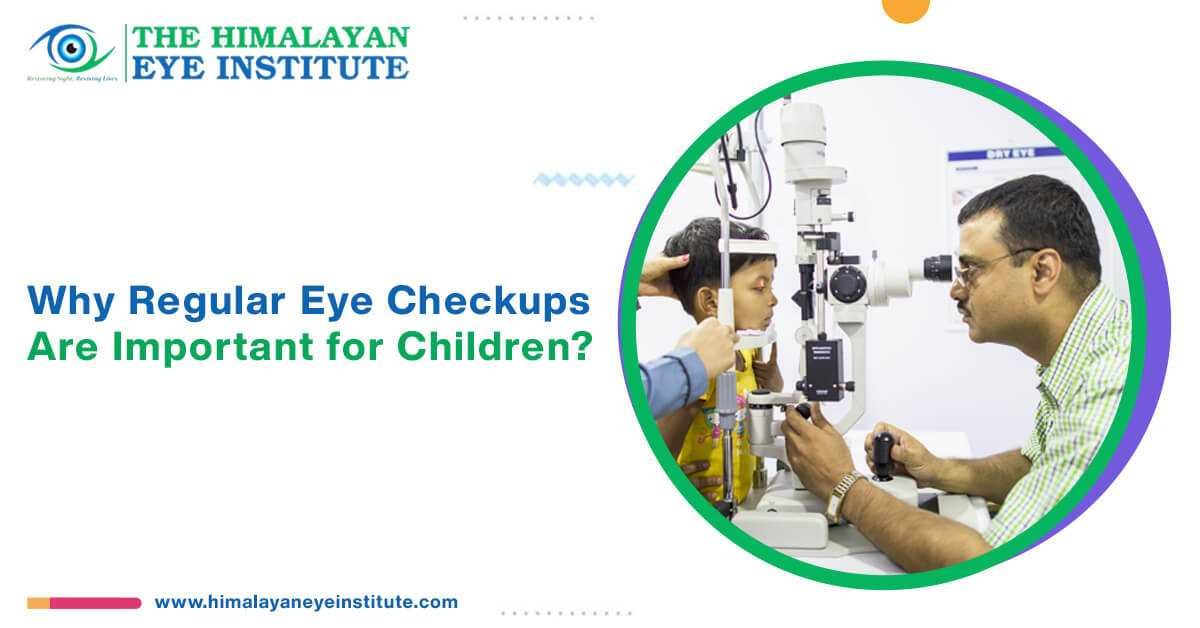
A pediatric eye exam conducted by a pediatric ophthalmologist is comprehensive, easy-going and can be performed even with young children and those who do not yet speak. This exam usually covers:
Visual Acuity Test: Tests the ability of each eye to focus.
Refraction Test: Finding the lens prescription required, to relax the focusing muscles (cycloplegic refraction)
Eye Alignment and Eye Movement Assessment: Looking for the ability of the eyes to move together and look in the same direction (strabismus)
Pupil and Red Reflex: Used for signs of internal eye conditions -screening.
Fundus Examination: This is an examination of the retina (back of the eye) and optic nerve (nerves at the back of the eye) with dilated pupils.
The whole procedure is non-threatening, age-appropriate and compatible with the child's level of co-operation. Parents should arrange for vision to be blurry for a few hours (light sensitivity) with the use of eye drops during the examination.
Why Opt for The Himalayan Eye Institute For Your Child's Eye Care?
If you're looking for a team to care for your child's vision, you want one that's both clinically experienced and child-friendly. Why families in North Bengal have come to trust in The Himalayan Eye Institute for pediatric eye care services:
Specialist Paediatric Expertise: The institute has qualified and expert ophthalmologists catering to your eyes in an exclusive manner using the latest technology and techniques.
Advanced Diagnostic Technology: The institute has a range of advanced ophthalmic diagnostics, such as 3D OCT, HFA perimetry, Specular Microscopy, Optical Biometry and the gold standard for anterior eye segment assessment, the OCULUS Pentacam. This will help in accurate diagnosis throughout your child's treatment.
Child Friendly Environment: The team at The Himalayan Eye Institute is aware that children require patience, gentleness and reassurance. All exams are completed in a comfortable environment for the child.
Complete Vision Care in One Place: Whether it's regular children's eye exam services or prescription glasses, or managing complex paediatric eye diseases - it's all in one place you can trust.
Frequently Asked Questions (FAQs)
When is the best time for my child to visit a kids' eye doctor?
At 6 months of age, for a formal eye examination, and again at 3 years of age and before school. If any concern arises, earlier.
My child has had a school vision test and got a passing grade. Should they continue to have an eye examination?
Yes. Screening tests are used in school to check basic visual acuity, but are not a good measure of eye alignment, depth perception, or early refractive errors. A thorough eye exam by a paediatric ophthalmologist offers much more detail.
Are glasses allowed for children under 12 years old?
Absolutely. If necessary, glasses can be issued as early as infancy. Paediatric frames are made to fit small faces and are designed to be safe, comfortable and secure.
Do kids experience pain during the eye exam?
No. The test is non-invasive. Pupil dilating drops will sting for a short period of time, but are pleasant and child-friendly.
A Final Note to Every Parent
Your child might not be telling you he or she has trouble seeing clearly, because if he or she doesn't, he or she doesn't see the problem. The only way to be certain is to have their eyes checked by a professional eye doctor for children.
Never delay action until a problem is apparent. Avoid using school screening as your sole method for identifying students. Remember that if your child doesn't complain, it doesn't mean that it is ok.
Vision shapes learning. Learning shapes life. Set your child up for success.
Schedule a child's eye test with The Himalayan Eye Institute today.